
Open-source Bitcoin mining hardware
Buy a Bitcoin miner: Bitaxe, Nerdaxe & open-source mining hardware
A miner you own, set up and can switch off yourself: we sell compact open-source devices from about 1 to 14 TH/s, from a quiet desktop unit to an eight-chip miner for the homelab. No cloud contract, no rented hashrate.
The goal first, then the device
Mining hardware for the home is rarely returned because of hashrate; it is returned because of noise, heat or electricity cost. So it is worth answering one question before buying: what should the device do for you?
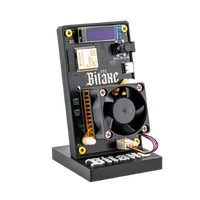
- Understand how mining works: a single Bitaxe Gamma is entirely enough. Technically it does the same as an industrial machine, just quietly and for about €3.70 of electricity a month.
- Help secure the network and play solo: every device can solo mine. What matters is not size but that you mine yourself; more on that in the solo mining guide.
- As much hashrate per watt as possible: the Nerdaxe Gaia with the BM1373 sits at around 11 to 12.5 J/TH, clearly ahead of every other model in our range. It is currently available for pre-order; the product page shows the delivery date.
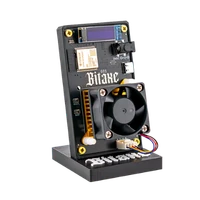
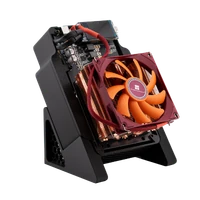
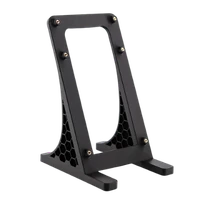
- A visible setup for a shelf or office: the Nerdaxe models with a large display, complemented by cooling and a mount.
- Serious compute in the homelab: NerdQaxe++ (around 4.8 TH/s), NerdQaxe++ Hydro with water cooling (around 6 TH/s) or NerdOctaxe (up to around 12 TH/s).
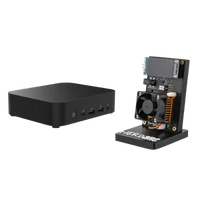
- Node and miner in one: the Sovereign Stack V1 combines your own Bitcoin node with a miner, so full sovereignty without third-party block templates.
All miners at a glance
Sorted by compute. The figures are guide values from firmware, measurements and manufacturer data; where sources differ, you see a range. The price column is pulled live from the shop.
| Model | Hashrate | Power draw | Efficiency | Cooling | Price |
|---|---|---|---|---|---|
| Bitaxe Gamma 601 | ~1.1 to 1.2 TH/s | ~17 W | ~14 to 16 J/TH | air, quiet | €139.00 |
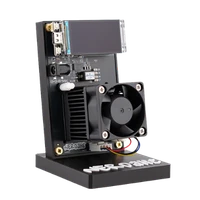
| Nerdaxe Gamma | ~1.05 to 1.3 TH/s | ~17 to 21 W | ~15 to 16 J/TH | air | €159.00 |
| Bitaxe GT | 2.15 TH/s | ~43 W | ~20 J/TH | air | €229.00 |
| Nerdaxe Gaia | ~2.4 to 2.8 TH/s | ~26 to 31 W | ~11 to 12.5 J/TH | air | €249.00 |
| Bitaxe 702 | ~3.75 TH/s | ~75 to 90 W | ~20 to 21 J/TH | air | €239.00 |
| NerdQaxe++ | ~4.8 TH/s | ~76 W | ~16 J/TH | air | €349.00 |
| NerdQaxe++ Hydro | ~6 TH/s | ~100 W | ~17 J/TH | water | €499.00 |
| Avalon Nano 3s (closed) | 6 TH/s | 140 W | ~23 J/TH | air, 33 to 38 dB per manufacturer | €299.00 |
| NerdQX | ~6 to 8 TH/s | ~140 to 160 W | ~17 to 20 J/TH | air, ~38 dB per manufacturer | €469.00 |
| NerdOctaxe | up to ~12 TH/s | ~160 to 200 W | ~16 J/TH | air | €699.00 |
| NerdOctaxe Hydro | ~14 TH/s | ~220 W | ~16 J/TH | water | €799.00 |
Every device in the table is open hardware with open firmware, except the Avalon Nano 3s from Canaan: it runs reliably, but firmware and board cannot be inspected. What that means day to day is explained in the open-source mining guide.
Popular miners in the shop
The six devices most people choose, from the entry point to a homelab setup. Price, rating and availability are on each card.

Bitaxe Gamma | 1.3 TH/s

Nerdaxe Gaia | 2,6 TH/s

Bitaxe 702 | 4.2 TH/s

NerdQaxe++ | 4,8 TH/s

NerdQaxe++ Hydro | 6 TH/s

NerdOctaxe | 12 TH/s
What running one costs per month
The purchase price is one half of the sum, electricity the other. Basis: continuous operation, 730 hours a month, €0.30 per kWh.
| Model | Power draw | Consumption per month | Cost per month |
|---|---|---|---|
| Bitaxe Gamma 601 | ~17 W | ~12.4 kWh | about €3.70 |
| Nerdaxe Gaia | ~26 to 31 W | ~19 to 23 kWh | about €5.70 to €6.80 |
| Bitaxe GT | ~43 W | ~31 kWh | about €9.40 |
| NerdQaxe++ | ~76 W | ~55 to 58 kWh | about €16.60 to €17.50 |
| NerdQaxe++ Hydro | ~100 W | ~73 kWh | about €22 |
| Avalon Nano 3s | 140 W | ~102 kWh | about €31 |
| NerdQX | ~140 to 160 W | ~102 to 117 kWh | about €31 to €35 |
| NerdOctaxe | ~160 to 200 W | ~117 to 146 kWh | about €35 to €44 |
| NerdOctaxe Hydro | ~220 W | ~161 kWh | about €48 |
The heat does not disappear, it goes into the room: 200 W of continuous load noticeably warms a small room. For your own tariff, use the mining calculator; measurements and tips for saving power are in Bitaxe power consumption.
Is mining at home worth it?
In plain numbers, no, and that applies to every device on this list. Take a Bitaxe Gamma at factory settings: on average it earns around 51 satoshis a day, currently just under 4 cents. Its electricity costs a good 12 cents a day at 17 W and €0.30 per kWh. The ratio stays similar for the larger devices, because hashrate and power draw grow together (as of 26 September 2026, €73,876 per BTC).
There are still good reasons for a home miner. Solo, you hold a ticket for a whole block of around 3.14 BTC in every second, you bring your own hashrate to the network, and the waste heat helps warm your home in winter. If you heat with electricity anyway or have surplus solar power, the maths looks different from buying every kilowatt hour at full price. The mining calculator works it out for your device and tariff.
Solo or in a pool?
Solo mining means your device searches on its own account. If it finds a block, the entire reward of currently 3.125 BTC plus fees is yours; that lottery character is why many people run a small miner. The chance depends only on hashrate, not on how long the device has been running: per year a Gamma at factory settings has about 1 in 16,900, a NerdQaxe++ about 1 in 3,800 and a NerdOctaxe at 12 TH/s about 1 in 1,500 (difficulty as of 26 September 2026). The mining calculator works out your model, and the background is in Finding a block with a Bitaxe.
Pool mining means your device works together with many others and you receive your share of every find the pool makes. That is regular tiny amounts instead of a tiny chance at a lot, but on average the same amount minus the fee. Both run on the same hardware, and switching takes less than a minute in the firmware. Our solo pool pool.bitaxe.de charges 0 %, and Choosing a Bitaxe mining pool compares the options.
Outlook: new chips and boards
A lot is happening on efficiency. The newer BM1373 powers our Nerdaxe Gaia at around 11 to 12.5 J/TH, while the BM1370 devices sit at 14 to 20 J/TH. Since version 2.15.2 the official Bitaxe firmware also knows two new boards of the “Bitaxe Color” line: the Naja Duo with two BM1372/BM1373 and the Gamma Hex with six BM1370. We do not currently carry either. What the Gaia can do in detail is in Nerdaxe Gaia explained.
What you will not buy here
We do not sell cloud mining or mining contracts. With both you pay in advance for computing power that somebody else owns, operates and can switch off at any time; in this field that is the most common shape of fraud. Here you get a device in your hand whose firmware is open and which still belongs to you even if this shop disappeared.
We also do not sell promises of returns. What a device earns depends on network difficulty, pool, electricity price, exchange rate and luck. Nobody can predict that seriously.
Accessories that are actually needed
- A power supply in the right class: 5 V / 6 A for the small models, 12 V / 5 A for the Bitaxe GT, 12 V / 6 A for the Nerdaxe Gaia, 12 V / 10 A for the Bitaxe 702 and the NerdQaxe models, 12 V / 20 A for the NerdQX and NerdOctaxe. Supplies that are too weak cause restarts under load; more in the power supply guide.
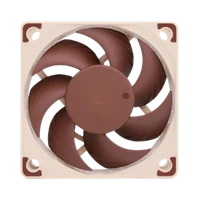
- Cooling: a bigger heatsink or a better fan lowers temperature and noise. It is the most common sensible addition.
- Upgrades: displays, mounts and cases for a clean setup that keeps running.
- Bitcoin node: for solo mining with your own block templates. Without a node, solo works through our pool pool.bitaxe.de (host stratum.bitaxe.de, port 3333, 0 % fee, Stratum V2 on port 3336); the pool configurator provides the values.
- Bundles: miner plus matching cooling as a set, if you would rather not assemble it yourself.
After the purchase: set up in minutes
- Set up a Bitaxe: step by step from the first Wi-Fi connection to the first share in AxeOS.
- Set up the Nerdaxe Gamma: the setup in NerdOS, including display settings.
- Set up a NerdQaxe: for the models with four ASICs.
- Open-source mining guide: background on firmware, licences and pools.
- Web flasher: install firmware in the browser. Our recommendation OSM-OS is preselected, and with “Keep configuration” your settings stay in place.
- Troubleshooter and support: if something goes wrong, the troubleshooter gets you to the cause in a few clicks, and the people answering support run this hardware themselves.
The most common mistakes when buying
These five points cost money or nerves later, and all of them are avoidable:
- Looking only at hashrate. A device with twice the hashrate usually draws twice the power. What matters is efficiency in J/TH, and across the BM1370 models that figure is similar throughout the range. Only the BM1373 makes a real jump.
- Underestimating the power supply. Not every device runs on 5 V: the Bitaxe GT, Nerdaxe Gaia, Bitaxe 702, every NerdQaxe, the NerdQX and the NerdOctaxe need 12 V, the NerdQX and NerdOctaxe even 20 A. A supply that is too weak does not show up at power-on but as restarts under load. Details in the power supply guide.
- Thinking about the location only after buying. From the 4.8 TH/s class upwards a miner is clearly audible in the room and releases its entire power draw as heat. That rules out living rooms and bedrooms in practice; a study, a shelf or a utility room works.
- Expecting a return. Home mining is a ticket in every draw, not an investment. Treat the electricity as the stake and you will not be disappointed; expect amortisation and you will be. Run the numbers in the mining calculator.
- Forgetting the accessories. A quiet fan, a matching heatsink or a stand cost little and often decide whether the device is allowed to stay in a living space.
In short
For getting started a single compact device is enough: quiet, frugal and technically complete. If you want more, the route goes through the Bitaxe GT and the Bitaxe 702 up to the NerdQaxe and NerdOctaxe models, and then space, cooling and electricity cost belong in the plan. Only comparing the Bitaxe range? That is on Buy a Bitaxe.