
Bitaxe.de

Solo mining: what it is, how it works and who it is worth it for

Solo mining is one of the most fascinating ways to mine Bitcoin. Instead of working alongside thousands of other miners in a pool, you try to find a valid Bitcoin block entirely on your own. That independence is exactly what makes solo mining so appealing to many bitcoiners: it is more direct, more self-reliant and closer to the original idea of a decentralised network.

Aktualisiert am 07. June 2026

At the same time it is important to judge solo mining realistically from the start. Finding a block on your own is technically possible, but in practice the probability of doing so with a single miner is very small. Solo mining is therefore not a predictable source of income; it is a deliberate decision in favour of independence, technical understanding and closeness to the Bitcoin infrastructure.

That is precisely why the topic is getting attention again. For many people the question is not only whether solo mining pays off, but also how to understand Bitcoin mining better and experience it first hand. Rather than simply feeding hash rate into a large pool, with solo mining you run your own small setup and take part in the network more directly.

On this page you will learn what solo mining is, how it works, how realistic a block find still is today and who solo mining is actually worth it for.

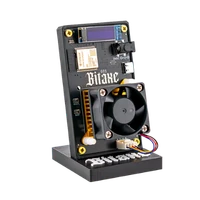
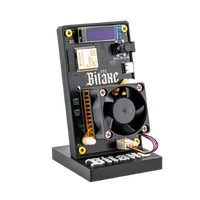
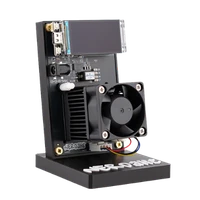
For many home miners a Bitaxe miner is one of the most accessible ways into the subject.

What is solo mining?

With solo mining, a miner tries to find a valid Bitcoin block on its own. That means you are not working together with other participants in a mining pool, but for your own account. If your miner really does find a valid block, the entire block reward — minus any technical or infrastructure fees, depending on your setup — goes to you, or rather to your own mining setup.

The big difference to pool mining is therefore that you do not bundle your computing power with other miners. In a pool many participants work together, find blocks far more often and share the reward proportionally. With solo mining there is no such split. You mine alone — and you alone carry the statistical risk of going a long time without a hit.

That is exactly what many people find so fascinating about it. Solo mining is the most direct form of Bitcoin mining, because you are not part of a large collective structure but trying to find a block for the network yourself. To many bitcoiners that feels more independent, more original and closer to the idea of a decentralised system.

At the same time solo mining needs an honest assessment. The probability of finding a block with a single miner is very low today. Solo mining is therefore less a classic model for regular earnings and more a combination of technology, independence, learning and a long-term chance at a rare hit.

In short:

Solo mining means looking for a Bitcoin block yourself, without a classic mining pool — with the full reward if you succeed, but with a very small probability of a hit.

How does solo mining work?

At its core, solo mining works exactly like any other form of Bitcoin mining: a miner continuously calculates hashes in order to find a valid block for the Bitcoin network. The difference is not in the kind of computational work, but in who it is done for and in what setup.

With solo mining your miner does not work for a classic pool that bundles the computing power of many participants. Instead your own setup tries to find a complete valid block itself. If it succeeds, the entire block reward goes to you, or to the wallet or infrastructure you set up for it.

In practice this means: your miner receives block templates or mining work, keeps calculating new attempts and checks whether a valid hit has appeared. That cycle repeats without interruption. Just as in pool mining, your device is doing real work for the network — only without the shared structure of a pool.

It is important to understand that while solo mining is fairly easy to explain technically, it remains very demanding statistically. Your miner can work correctly for a long time, deliver hash rate and still not find a block. That does not mean the setup is broken; it is simply the reality of solo mining: many correct attempts, but only a very small chance of the decisive one.

For many people that is exactly the appeal. Solo mining makes visible what Bitcoin mining essentially is: a permanent competition for a valid block, one you can follow and experience yourself even on a small scale.

Simplified, solo mining works like this:

  1. Your miner connects to your solo mining setup.
  2. It receives mining work or block templates.
  3. It calculates hashes continuously.
  4. On ordinary attempts it simply carries on working.
  5. In the very rare successful case it finds a valid block.

It is this simplicity of the basic principle that makes solo mining so interesting. It is easy to understand — but very hard to actually succeed at.

Solo mining vs. pool mining: what is the difference?

Anyone looking into Bitcoin mining sooner or later runs into the question: solo mining or pool mining? Both pursue the same goal — finding a valid Bitcoin block — but in practice they differ considerably.

In pool mining, many miners join forces and bundle their computing power. That means blocks are found far more often, and the reward is then distributed proportionally among the participants. The individual payouts are smaller, but as a rule they are much more regular and predictable.

With solo mining it is exactly the other way round. Here your miner does not work as part of a group but alone, for your own setup. If your device really does find a valid block, the entire reward goes to you. At the same time, the probability of that hit with a single miner is very small.

So the biggest difference lies in how risk and reward are distributed.
With pool mining you trade independence for more regular, smaller earnings.
With solo mining you trade predictability for the possibility of receiving the full block reward if you succeed.

For many people pool mining is therefore the more practical route. It is easier to judge, feels more calculable day to day and suits people who look at mining mainly as continuous participation. Solo mining, by contrast, appeals above all to people who value independence, technology and the direct experience of mining.

Pool mining fits better if you …

  • want to see more regular results
  • prefer a more predictable mining setup
  • want to use mining in a practical, everyday way

Solo mining fits better if you …

  • want to mine as independently as possible
  • find the idealistic side of Bitcoin mining appealing
  • enjoy your own setup, the technology and experimenting
  • accept that a block find is very unlikely

The key difference in one sentence

Pool mining trades independence for more predictable results — solo mining trades predictability for maximum independence.

If you want to understand the difference in terms of a concrete home mining setup, read our Bitaxe miner guide as well.

How realistic is solo mining today?

Solo mining is technically entirely real — but statistically very demanding. That distinction matters. It is not wrong to say that you can still mine solo today. What would be wrong is the expectation that a single miner will find a block predictably or in the short term.

The difficulty is not that solo mining „no longer works“, but that the Bitcoin network today is enormous and highly competitive. Around the world a great many miners with vast computing power are working to find new blocks. Anyone mining solo with a single device really is taking part — but with a comparatively tiny hash rate in a huge competition.

That is exactly why solo mining is not a realistic model for regular earnings today. Nobody should approach it expecting to find a block reliably within a short time. It is far more accurate to see it as a long-term chance at a very rare hit.

For many people that is not an argument against it, though — it is precisely the attraction. To them solo mining is less an economic strategy than a deliberate way of experiencing Bitcoin mining for themselves. It combines technology, independence, learning and the option of running a setup that is not simply part of a large pool.

What matters most, then, is the right expectation:
Yes, solo mining is possible today.
No, a block find with a small setup is not likely.

Anyone who understands that can judge solo mining far more realistically. It is no longer about the idea of an easy income model, but about a very particular way of mining: directly, independently and deliberately.

In short:

Solo mining is technically real today, but statistically extremely difficult — and therefore interesting above all for people who value the idealistic and practical side of mining.

Why is solo mining still so appealing to many people?

Despite the very small probability of a block find of your own, solo mining holds a particular fascination for many bitcoiners. The reason lies not only in the theoretical chance at a full block reward, but above all in the way you experience mining: more directly, more independently and more personally.

For many it is the most original form of Bitcoin mining. Instead of simply feeding computing power into a large pool, you run your own setup and try to find a block for the network yourself. That independence is the appeal for many people. It feels closer to the idea of an open, decentralised Bitcoin network.

On top of that comes the technical and practical learning. Solo mining forces you to engage more deeply with mining, infrastructure, wallets, the network and how Bitcoin actually works. For people who do not just want to hold coins but really understand the technology behind them, that is particularly interesting.

Another point is the idealistic side. Many people choose solo mining not because they expect a predictable income, but because they want to actively support independence, self-determination and decentralisation. At a time when a lot of mining runs through large pools, a solo setup of your own feels to many like a more direct contribution to Bitcoin culture and to the idea of sovereign infrastructure.

And finally the experience itself plays a part. Solo mining combines technology with a very particular kind of suspense: the device runs, works correctly and really does take part in the network — and in theory there is always the possibility that this very setup lands the rare hit one day. Even though that chance is small, it is exactly what makes the subject so fascinating to many people.

Why solo mining excites so many people:

  • it feels more independent and more direct
  • it brings people closer to the Bitcoin infrastructure
  • it has a high learning and technology factor
  • it appeals to people who want to live decentralisation in practice
  • it combines mining with a very particular form of suspense and self-reliance

That is exactly why, for many people, solo mining is not primarily a question of arithmetic but a deliberate decision in favour of a particular approach to Bitcoin mining.

Who is solo mining worth it for?

Solo mining is not worth it for everyone. That is precisely why it is important to judge the subject not only technically but also personally. Anyone approaching solo mining expecting regular earnings or predictable payouts will be disappointed in most cases. For other people it can be exactly the right form of mining.

Solo mining is particularly interesting for Bitcoin enthusiasts who want to experience the network actively rather than just understand it in theory. If you want to follow Bitcoin mining yourself and run your own setup, solo mining gives you very direct access to the technical side of Bitcoin.

It is often especially attractive to tinkerers, makers and technically minded users as well. The subject does not require industrial infrastructure, but it lives on your own understanding, on experiments and on the willingness to engage with mining, wallets, connections and procedures. That practical learning is what makes it so rewarding for many.

Another good match are people who do not merely approve of decentralisation and independence but want to live them deliberately. For many, solo mining is an idealistic decision: away from pure pool logic, towards a setup of your own with more direct participation in the network.

Solo mining can also be interesting for home miners — but only if the expectations stay realistic. If you understand that it is not about predictable results but about technology, experience and a long-term chance, you can place the subject sensibly.

Solo mining is particularly worth it for you if you …

  • want to understand and experience Bitcoin mining yourself
  • enjoy technology, your own setup and experiments
  • consider independence and decentralisation important
  • deliberately see home mining as a practical experience
  • accept that a block find is very unlikely

Solo mining is rather less suitable for you if you …

  • depend on regular payouts
  • judge mining exclusively by profitability and predictability
  • want as little as possible to do with technology and setup
  • expect to find a block quickly with a small setup

That honest distinction matters. Solo mining is above all for people looking for an independent, technical and deliberate approach to Bitcoin mining — not for users who simply want earnings that are as calculable as possible.

Who is solo mining not really suitable for?

As exciting as solo mining is for many people, it does not fit every expectation and every goal. Precisely because the subject is often emotionally charged, an especially honest assessment is worthwhile here. Anyone starting solo mining with the wrong ideas will quickly find the reality of the setup frustrating.

Solo mining is rather unsuitable for people who mainly depend on regular mining earnings. Unlike pool mining there are no predictable small payouts here. Instead your miner works for a long time with no guaranteed success. If you are looking for a calculable form of mining, solo mining will usually not satisfy you.

It is also not the obvious choice for users with a strong focus on returns or efficiency. If your central question is how to mine Bitcoin as consistently and economically as possible, solo mining will quickly reach its limits. The probability of a hit with small setups is simply too low for that.

Solo mining is likewise less suitable for people who want as little as possible to do with technology, setup and understanding the infrastructure. Even though modern setups have become considerably more accessible, solo mining still depends on engaging with your own setup and understanding the basic logic behind it.

It also gets difficult if someone starts out expecting to realistically find a block in a short time with a single small miner. That hope is often the source of disappointment. Solo mining is not a shortcut to quick success, but a long-term, deliberate way of taking part in Bitcoin mining.

Solo mining is probably not the right choice if you …

  • expect regular payouts
  • judge mining mainly by profitability and predictability
  • want as little as possible to do with technology and setup
  • hope for a quick block find with a small setup

It is this clear distinction that makes a realistic assessment possible in the first place. Solo mining is not a universally „better“ route, but a very particular form of mining that makes sense above all when your motivation really fits.

Solo mining at home: what do you need?

If you want to run solo mining at home, you need the right basics and realistic expectations far more than a large industrial setup. Because even though the principle is simple, solo mining does not work by just plugging in some miner and hoping something happens.

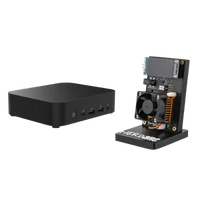
The first building block is of course the mining hardware itself. Without a suitable miner there is no hash rate and therefore no participation in the search for a valid Bitcoin block. Depending on your setup that can be a small home miner or a more powerful device. What matters most is that the miner runs stably and can be integrated sensibly into your setup.

Then there is a Bitcoin wallet, or an address that can be linked to the block find if you succeed. After all, solo mining means you are not paid a share within a pool but working for your own setup.

You also need a suitable solo mining setup — infrastructure through which your miner receives work and through which a possible block find can be processed. Depending on the technical approach that can be implemented in different ways.

Equally important are a stable internet connection, a sensible location and a setup that can run reliably over time. In home mining in particular, what counts is not only that a device works in theory, but that it stays practical to use day to day.

And at least as important as the technology is your expectation. If you run solo mining at home, you should not assume you will find a block predictably with a small setup. It makes far more sense to understand solo mining as a combination of technology, learning, independence and a long-term chance.

For solo mining at home you essentially need:

  • a suitable Bitcoin miner
  • a Bitcoin wallet
  • a matching solo mining setup
  • stable internet and reliable operation
  • and above all: realistic expectations

In home mining that is decisive. It is not the biggest hardware alone that makes a sensible setup, but understanding what solo mining can achieve — and what it cannot.

If you already have a miner and want to put the next steps into practice, you will find help with the setup in our support area and in the Bitaxe setup guide.

Why Bitaxe is so interesting for solo mining

When it comes to solo mining at home, Bitaxe is particularly interesting for many users. The reason lies not only in the technology itself, but in the combination of open source, home suitability and direct practical relevance. While many classic ASIC miners are designed for professional environments and maximum performance, Bitaxe is what makes solo mining tangible for individuals in the first place.

A central point is the open approach. Bitaxe stands for an open-source mining concept in which hardware and software are not simply treated as a closed black box. For many people who find solo mining appealing, that fits the motivation behind it perfectly: more independence, more understanding and a more direct relationship with the technology.

Then there is its suitability for home mining. Large miners are often loud, hot and hard to run sensibly in everyday life. A Bitaxe, by contrast, is considerably more compact and far more realistic for smaller setups at home. That matters in solo mining in particular, because for many users it is not only about raw performance but about being able to run a setup of their own at all.

Another reason is the lower barrier to entry. Bitaxe makes solo mining more accessible for people who want to explore the subject, try it out and understand Bitcoin mining better along the way. For many, the device is not simply a miner but a genuine way into learning about and experiencing the infrastructure behind Bitcoin.

It is this mix of openness, everyday practicality and technical access that makes Bitaxe so interesting for solo mining. The device is not appealing because it is meant to compete with industrial mining farms, but because it makes solo mining far more tangible for individuals at home.

If you first want to understand what a Bitaxe miner is, read our main page on the subject. If you want to go deeper into practice, read the Bitaxe miner guide as well. And if the open approach behind it is what interests you most, you will find more on our page about open-source Bitcoin mining.

Conclusion: solo mining is not a shortcut, it is a deliberate decision

Solo mining is not an easy shortcut to quick Bitcoin earnings. The probability of finding a block with a single setup is very small — and that is exactly why the subject should be viewed realistically from the outset. Anyone starting with the expectation of regular payouts or predictable results will usually misjudge solo mining.

And yet, for many people, that is precisely what makes it so appealing. It brings Bitcoin mining back to what fascinates so many about it: independence, technical understanding and direct participation in the infrastructure of the network. Instead of simply feeding hash rate into a large pool, you run your own setup and engage deliberately with the technology behind it.

That is where the real strength of solo mining lies. It is less a model for calculable results than a deliberate way of experiencing Bitcoin mining yourself. For bitcoiners, tinkerers, home miners and everyone who takes open source, decentralisation and independence seriously, solo mining can therefore be a particularly rewarding decision.

Approach solo mining with the right expectation and you do not just get another variant of mining — you get more direct access to one of the most fascinating areas of the Bitcoin network.

Solo mining hardware for home

If you want to pick suitable hardware or accessories straight after this guide, these pages are the most important next steps:

Want to understand solo mining better and get started right away? If you find solo mining interesting not only in theory but want to build your own setup at home, you will find suitable Bitaxe miners here for getting into open-source home mining.

Frequently asked questions

What is solo mining?
With solo mining, a miner tries to find a valid Bitcoin block itself. Unlike pool mining, the proceeds are not shared with other participants. In return the variance is considerably higher: if you succeed you get the complete block reward including fees, but very long periods can pass between successes.
What is the difference between solo mining and pool mining?
The most important difference is how risk and reward are distributed. In pool mining, many miners bundle their computing power and receive smaller, more regular payouts. In solo mining you work alone: you only get something if your own setup actually finds a block, but then you keep the full reward.
Do I need my own Bitcoin node for solo mining?
For genuine solo mining the infrastructure typically runs through your own Bitcoin node, or bitcoind, which supplies block templates via getblocktemplate. In practice many home miners use a node of their own for this; there are, however, also solo services that provide this infrastructure for you.
What do I get if I find a block solo?
If you find a block solo, your setup receives the full block subsidy plus the transaction fees in that block. The Bitcoin block subsidy currently stands at 3.125 BTC per block, and the fees of the included transactions are added on top.
Realistically, how long does it take to find a block solo?
That depends entirely on your hash rate relative to the total competition on the network. A new block appears on the Bitcoin network roughly every ten minutes on average, but for a single solo miner it can take months or years before a hit occurs at all. That is exactly why solo mining is a question of probability rather than a predictable process.
Is solo mining profitable?
For small setups solo mining is generally not a predictable profit model. River explicitly describes solo mining with a small hash rate as extremely high-variance and compares it to a lottery; mining pools exist precisely because costs arise continuously while solo mining earnings are irregular. For many home miners solo mining is therefore more a mix of learning, sovereignty and hobby than a calculable source of income.
Which hardware is suitable for solo mining at home?
For serious Bitcoin mining you need ASIC hardware. A single ASIC can mine solo in principle, but according to River small USB miners are neither competitive nor realistically profitable. For home use the interesting devices are therefore those deliberately designed for low power draw, little noise and easy handling.
Does Bitaxe make sense for solo mining?
Yes, for the right purpose. Bitaxe is positioned as an open, quiet, power-saving home miner that can be run directly over Wi-Fi and, according to the official project, supports pool mining as well as lottery and solo mining. Bitaxe makes sense above all for people who want to experience, understand and control solo mining at home — not for users expecting regular, calculable earnings.