
Bitaxe miners
Bitaxe miners for open-source Bitcoin mining at home. Not sure which model fits? Our buying guide compares them all: buy a Bitaxe – all models compared.

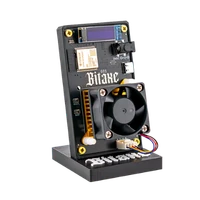
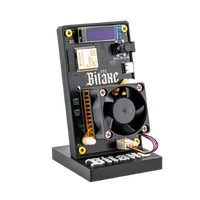
Bitaxe Gamma | 1.3 TH/s

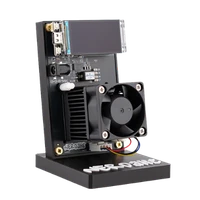
Bitaxe 702 | 4.2 TH/s

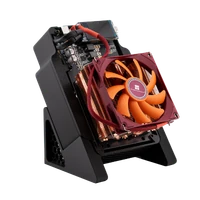
Bitaxe Copperzilla | 1.5 TH/s

Bitaxe GT | 2.15 TH/s

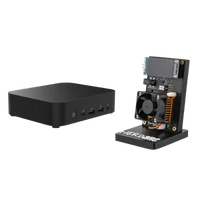
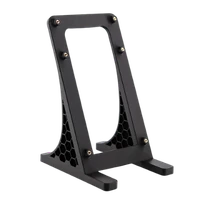
Sovereign Stack V1

AXP60 Copperzilla Kupfer Kühler 3.0

ICE Tower Low Profile Kit

ICE Tower Kit
What makes a Bitaxe
A Bitaxe is an open-source Bitcoin miner: schematics, board layout and the AxeOS firmware are open, and you enter pool, worker and your own Bitcoin address yourself in the browser. The board runs the same ASIC generation as large industrial miners – just a single one: quiet enough for a living room and frugal enough for continuous operation. How the solo mining behind it works is covered in our guide.
Which Bitaxe fits you?
The Bitaxe Gamma is the entry point: around 1.3 TH/s at roughly 15 W and under 15 dB(A) – the default for a living room. The Bitaxe GT delivers 2.15 TH/s from two ASICs, the Supra Hex 702 bundles six chips into around 4.2 TH/s. If you want to overclock, take the Copperzilla with solid copper cooling. The miner comparison shows all models side by side, and the Bitaxe buying guide goes into detail.
All Bitaxe models compared
| Model | Chips | Hashrate | Power draw | Efficiency | Power supply | Price |
|---|---|---|---|---|---|---|
| Bitaxe Gamma 601 | 1× BM1370 | ~1.3 TH/s | ~15 W | ~14 J/TH | 5 V, 30 W | €139.00 |
| Bitaxe Copperzilla | 1× BM1370 | ~1.5 TH/s | ~22 W | ~15 J/TH | 5 V, 30 W | €179.00 |
| Bitaxe GT 801 (Gamma Turbo) | 2× BM1370 | 2.15 TH/s | 43 W | ~20 J/TH | 12 V, 60 W | €229.00 |
| Bitaxe Supra Hex 702 | 6× BM1368 | ~4.2 TH/s | ~90 W | ~21 J/TH | 12 V, 120 W | €239.00 |
The values come from our product pages. What a single device achieves in daily use depends on clock, voltage and cooling; measured values per model are in the overclocking guide. The mining calculator works out the power draw and block chance of each model.
Ready to run out of the box
Every device ships with power supply and instructions; setup runs entirely in the browser and takes a few minutes – shown step by step in the setup guide. Shipping across Europe, payment by card, PayPal, bank transfer or Bitcoin, 14-day returns and human support.