

AXP60 Copper Pro
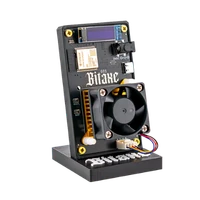
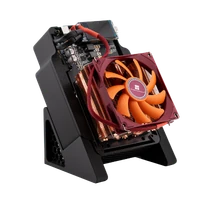
Copper heatsink with 210 g of mass and a 60 mm fan for the Bitaxe Gamma and Nerdaxe Gaia
Item no.: 82011 · Manufacturer: Thermalright
- 210 g of solid copper with two heatpipes
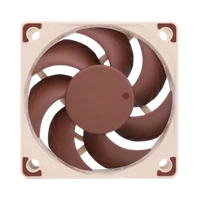
- Active 60 mm fan instead of the 40 mm standard
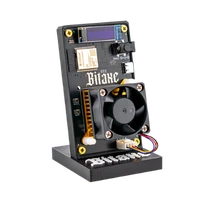
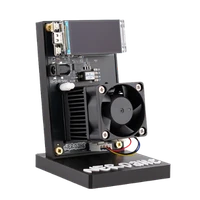
- For the Bitaxe Gamma and Nerdaxe Gaia
- Headroom for sustained load and overclocking
plus shipping · −5% with Bitcoin: €56.05
In stock · ships within 24 h
Product information
AXP60 Copper Pro: copper cooling with headroom for the Bitaxe Gamma and Nerdaxe Gaia
The AXP60 Copper Pro is the heatsink for everyone whose Bitaxe Gamma or Nerdaxe Gaia leaves too little room above the temperature limit with its stock cooling. On the ASIC sit 210 g of solid copper, two heatpipes pull the heat out of the contact surface into the fin stack, and a 60 mm fan pushes it out.
Copper takes up heat faster than aluminium and buffers load peaks instead of passing them straight to the temperature readout. The board runs more evenly, and you have room to raise frequency and voltage.
Why the AXP60 is more than a bigger heatsink
- Mass instead of fan speed: 210 g of copper absorb heat before the fan has to spin up at all.
- Two heatpipes: they pull the heat out of the small contact area and put the whole fin stack to use.
- 60 mm instead of 40 mm: the larger fan moves the same volume of air at a lower speed.
- Headroom for sustained load: if you mine around the clock, you work with distance from the temperature limit instead of right at it.
Compatibility: Bitaxe Gamma and Nerdaxe Gaia
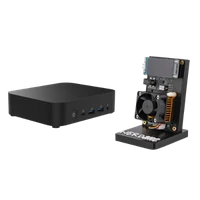
The AXP60 Copper Pro fits the Bitaxe Gamma and the Nerdaxe Gaia. On the Bitaxe Gamma Copper Pro and the Nerdaxe Gaia Copper Pro it comes fitted from the factory. It is not intended for:
- older Bitaxe models with a different layout and mounting pattern
- the Nerdaxe Gamma
- the larger boards of the NerdQaxe++ and NerdOctaxe – the AXP90 Copper Pro is made for those
Fitting: swap, seat, plug in the fan
Take the old heatsink off, clean the contact surface, seat the AXP60, plug in the 60 mm fan. Nothing is soldered or drilled. Customer feedback does show that one spot is fiddly during alignment – take a few quiet minutes for it. How the miner starts up again afterwards is covered in the Bitaxe setup guide and the Nerdaxe setup guide.
Who the AXP60 Copper Pro is for
For everyone who does not run their Bitaxe Gamma or Nerdaxe Gaia at factory settings but adjusts frequency and voltage – and for anyone who wants permanent headroom in a warm room.
It is less of a fit if your miner should stay compact and discreet on a desk: the AXP60 is considerably larger than the stock cooling. If that is too much, an adjusted fan curve is often enough on its own.
What you need to fit it
Delivered are the heatsink, the 60 mm fan and, depending on the set variant, the mounting hardware. Thermal paste is not listed as a separate item – have some ready if you are out. Beyond that you only need a spot with some airflow.
Accessories and sensible upgrades
- Copper heatsinks for the voltage regulators – the AXP60 cools the ASIC, not the rest of the board.
- ICE Tower Low Profile kit if you would rather fit a complete set with bracket, paste and Y-splitter.
Ready for more cooling headroom on your miner?
If your Bitaxe Gamma or Nerdaxe Gaia works at the temperature limit or you need room above it when overclocking, the AXP60 Copper Pro is the most direct answer: more copper, more surface, more airflow.
Frequently asked questions about the AXP60 Copper Pro
Does the AXP60 Copper Pro fit the Bitaxe Gamma 601?
Does the heatsink fit the Nerdaxe Gaia?
Does the AXP60 fit the Nerdaxe Gamma?
Which boards does the AXP60 not fit?
Is a fan included or do I need my own?
How much copper is in the heatsink?
Will my miner get quieter with it?
Do I need the AXP60 if I do not overclock?
Do I need tools or soldering skills for the swap?
Does the miner stay as compact as before?
What is the difference to the AXP90 Copper Pro?
What is the difference to the ICE Tower Low Profile kit?
What is the difference to the Bitaxe Gamma Copper Pro?
Does the AXP60 cool the voltage regulators too?
Why buy from Bitaxe.de?
Free shipping from 200 €
Free shipping to almost every EU country from 200 €, shipping to the EU and Switzerland with UPS and a tracking link. Items in stock leave within 24 hours, with no customs surprises inside the EU.
Truly open source
Bitaxe, Nerdaxe, NerdQaxe & co. are open hardware running open firmware (AxeOS or NerdOS): you set pool, clock and voltage yourself. No cloud account, no vendor lock-in, no black box.
CE, warranty & returns
Every product carries the CE marking. Plus statutory warranty and a 14-day right of withdrawal for a safe order. If something is not right, we find a solution with you, person to person.
Direct support
Questions about setup, pool, firmware or your order? By email or Telegram you get help from someone who runs these devices themselves, in English or German, beginners welcome.
Customer reviews
5.0 / 5 · 21 reviews from customers who bought this product from us.
Alles passt
Commandé au départ pour mon Nerdaxe Gamma… sauf qu'il ne va pas dessus, j'aurais dû vérifier la compatibilité avant. Il a donc atterri sur mon Bitaxe Gamma, et quel bloc ! Un vrai lingot de 210 g de cuivre, avec un ventilateur de 60 mm qui tourne tout doucement, et l'ASIC a perdu une bonne dizaine de degrés. Seul regret : le Nerdaxe, lui, reste avec son refroidissement d'origine.
Easy swap, apart from getting the Copper Pro to sit perfectly flat, since it likes to shift a little to one side until it is fixed. After a month at 625 MHz and 1150 mV the ASIC reads 52 °C in a 21 °C room with the fan on auto. One thing to check before ordering: the Gamma no longer fits the small printed case I had, so now it lives open on a shelf.
Zwei Gammas laufen bei mir im Keller nebeneinander, beide auf 575 MHz und 1150 mV, und nur einer hat den AXP60 bekommen. Das macht den Vergleich einfach: Der mit Serienkühler liegt bei 57 °C, der umgebaute bei 46 °C, und das bei konstant etwa 19 °C im Raum. Bei den Spannungswandlern tut sich dagegen kaum etwas, deshalb sitzen auf beiden inzwischen die kleinen Kupferkühlkörper. Hörbar ist der Unterschied auch, den umgebauten muss man neben seinem Nachbarn schon suchen. Die Montage selbst war unspektakulär, das Ausrichten klappte bei mir sogar auf Anhieb. Kleiner Haken ist das Lüfterkabel: Es ist recht knapp bemessen und muss ziemlich straff zum Anschluss auf dem Board geführt werden, ein paar Zentimeter mehr hätten nicht geschadet. Am Ende habe ich es an der Platinenkante entlang verlegt, das reicht gerade so.
Beim Ausrichten wollte eine Stelle erst mal diskutieren, der Rest saß sofort. Seitdem ist der Chip zweistellig kühler, die Diskussion hat sich also gelohnt.
Room at 22 °C, Gamma on AxeOS 2.15.3, five days of checking the dashboard far too often. With the stock cooler and factory settings my ASIC sat around 60 °C and the little 40 mm fan was spinning fast most of the day. Same settings with the AXP60 and the fan on auto: the chip stays at 48 °C while the fan just idles at the minimum speed I set, so the regulation has basically nothing to do! Of course I could not leave it like that. At 700 MHz and 1200 mV the ASIC now holds about 55 °C, VR around 68 °C, and the hashrate settled near 1.42 TH/s. The 60 mm fan also sounds totally different, a deep whisper instead of a mosquito. Next experiment: the little copper heatsinks on the VR, I am curious if they knock a few degrees off those 68.
Gestern Abend bei 750 MHz und 1200 mV angekommen: ASIC 58 °C, VR 74 °C, und das nach gerade mal drei Tagen mit dem Kühler. Beim Umbau klebte der alte Kühler erst ziemlich fest, mit vorsichtigem Hin- und Herdrehen ging er dann ab, der Rest war schnell erledigt. Was gut 200 Gramm Kupfer ausmachen, sieht man beim Hochtakten: Die Temperatur kriecht minutenlang nach oben, bevor sie sich einpendelt. Mal sehen, wie weit ich noch komme!
Con questo dissipatore il Gamma tiene 700 MHz a 1200 mV sotto i 57 °C; con quello di serie a 625 superavo già i 65. La prova vera sarà l'estate.
Bought it because the tiny stock fan on my Gamma was driving me nuts and my girlfriend kept asking what that buzzing in the corner was. The 60mm fan spins way slower and its basically just a soft whoosh now even at night. The temprature on the little screen dropped a lot too and I didn't touch a single setting since I have no clue what most of them do. Six weeks later she has forgotten the miner is even there.
Getauscht am Küchentisch in zwanzig Minuten, am längsten hat das Abziehen des alten Lüftersteckers gedauert. Hashrate unverändert, ASIC rund neun Grad kühler, der Lüfter spürbar ruhiger.
Some weeks after setting up my Gamma I raised the frequency a little, because a video made it look easy. The fan then ran loud all the time, the temperature number on the small display went higher than I liked, and one warm evening the miner even lowered the frequency again by itself, which I only later understood was a protection. A friend who also mines told me the small stock cooler is simply at its limit with that setting and pointed me to this one. Changing it was less scary than I thought, I was only nervous to press too hard on the board, and nothing needed soldering or special tools. Now the same setting runs with a clearly lower temperature on the display, and the protection has not started again. After reading the overclocking guide on the shop's website I also understand better what I actually changed there. For a beginner it is a calm feeling to have some reserve now.
Schneller montiert als gedacht, eine Viertelstunde mit Kaffee nebenher, und der Gamma ist seitdem richtig angenehm leise. Freut mich jedes Mal, wenn ich ins Arbeitszimmer komme!
Am Bitcoin-Stammtisch in unserer Stadt hat mir jemand erklärt, dass der kleine Serienkühler am Bitaxe Gamma beim Übertakten schnell an seine Grenze kommt. Ich hatte mich bis dahin sowieso nicht an Frequenz und Spannung herangetraut, fast ein Jahr lief der Gamma nur mit Werkseinstellungen. Als Anfänger will ich lieber weit weg von jeder Temperaturwarnung bleiben, also kam dieser Kühler drauf. Für den Umbau habe ich mir einen Samstagvormittag freigehalten, am Ende war es knapp eine Stunde. Danach habe ich in AxeOS den nächsthöheren Frequenzwert ausgewählt, mehr nicht. Seit zwei Wochen schaue ich morgens vor der Arbeit kurz ins Dashboard: Der Chip ist mit dem höheren Takt immer noch kühler als früher ganz ohne Änderungen, und die Hashrate liegt ein paar Prozent höher. Weiter gehe ich vorerst nicht. Gewöhnen musste ich mich nur an das Gewicht, denn für so ein kleines Board ist der Kühler ziemlich schwer. Beim Aufsetzen war ich entsprechend vorsichtig, und auch jetzt fasse ich den Miner lieber am Kühler an als an der Platine.
Zwölf Kelvin weniger am ASIC. Verglichen habe ich je eine Woche mit 600 MHz, 1150 mV und Lüfter fest auf 100 %, Raum jeweils um 23 °C: vorher im Schnitt 63 °C, jetzt 51 °C. Inzwischen regelt AxeOS wieder auf eine Zieltemperatur von 55 °C, und der 60er dreht dabei nur etwa halb so schnell wie früher der 40er auf Anschlag. Den Serienkühler hebe ich auf, falls ich den Gamma irgendwann weitergebe.
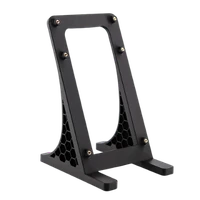
My Gamma's stock cooler was the limit the moment I got ambitious: at 725 MHz / 1200 mV it hit the 70 °C warning in under an hour. Same settings on this copper block have been running since June and the ASIC sits around 57 °C. Downside is the weight. 210 g on a board that small makes it lean back on my printed stand, so it got a fixed corner of the desk and I've stopped carrying it around.
¡Por fin puedo jugar con la frecuencia sin mirar la temperatura cada cinco minutos! Con el disipador de serie mi Gamma ya rozaba los 66 °C a 600 MHz, así que lo tenía en valores de fábrica y punto. Desde principios de junio lleva este AXP60 y lo he ido subiendo poco a poco hasta 700 MHz: anda por 1,4 TH/s y el ASIC no pasa de 61 °C, con el verano de Valencia entrando por la ventana. Encima el ventilador grande hace mucho menos ruido que el pequeño.
Mein Headset hat bei Videocalls das Sirren vom kleinen 40er so zuverlässig mitgeschnitten, dass ein Kollege irgendwann gefragt hat, ob bei mir nebenan der Zahnarzt bohrt. Seit einer Woche sitzt jetzt der AXP60 mit seinem 60er Lüfter auf dem Gamma, und das Thema ist durch. Der dreht so gemütlich, dass im Call nichts mehr ankommt, am Schreibtisch bleibt nur ein leises Rauschen. Takt hab ich gelassen, wie er war, mir ging's echt nur um Ruhe.
Bevor der Serienkühler runterkam, habe ich Lage und Kabelführung fotografiert, das hat beim Zusammenbau Zeit gespart. Kontaktfläche mit Reinigungsalkohol gesäubert, dünn Paste aufgetragen und nach einer Probemontage den Abdruck kontrolliert: gleichmäßig über den ganzen Chip, also wieder aufgesetzt und fixiert. Der 60er steckt am selben 5-V-PWM-Anschluss wie vorher der 40er. Werkseinstellungen habe ich gelassen; nach vier Wochen zeigt AxeOS am ASIC um die 50 °C, gut zehn Grad weniger als vorher.
650 MHz, 53 °C, fan barely audible. Sweet.
Sul mobile del soggiorno il mio Bitaxe Gamma faceva più rumore del frigorifero; adesso vince il frigorifero. Per montarlo ci ho messo un pomeriggio intero, ma era la prima volta che smontavo qualcosa del genere e la pasta termica ho dovuto comprarla a parte. Niente saldature, per fortuna, visto che io e il saldatore non ci siamo mai presentati. La ventola da 60 gira così piano che ormai la sento solo quando spengo la TV.
Ausgepackt, kurz in der Hand gewogen und erstmal gegrinst: über 200 Gramm Kupfer für einen einzigen Chip! Der Umbau am Gamma ging ohne Drama, die meiste Zeit hat das Abwischen der alten Paste gekostet. Der 60er Lüfter sieht auf dem kleinen Board fast komisch groß aus, dreht aber so gemächlich, dass ich ihn am Schreibtisch glatt vergesse. Hätte ich mal früher bestellt!
Related guides
Setup, pool, cooling, power supply and sensible upgrades for your setup.
You might also like

Nerdaxe Gaia Copper Pro | 3 TH/s

Bitaxe Gamma Copper Pro | 1.5 TH/s

NerdQaxe Copper Pro | Overclocking ready
