
Guides & knowledge
Every article in “Guides & knowledge”: guides, comparisons and background on Bitaxe, Nerdaxe, NerdQaxe, AxeOS and solo mining.

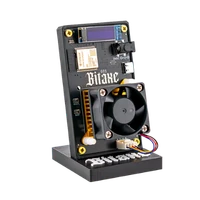
Nerdaxe Gaia: what the BM1373 miner can do, which firmware to run and who it is for
A single BM1373 in the familiar Nerdaxe format: factory settings from the source code, hashrate and power draw with every documented figure, the 12-volt power supply, OSM-OS from the flasher, setup, overclocking up to the current limit, block odds and electricity cost, plus a comparison with the Nerdaxe Gamma, Bitaxe GT and NerdQaxe++.

Setting up Stratum V2 on a Bitaxe: encrypted solo mining in five fields
Since AxeOS 2.14 every Bitaxe speaks Stratum V2, and since September 2026 so does the Bitaxe Pool. This guide walks through the AxeOS fields one by one, shows how to set up the fallback and verify the connection, and lists what goes wrong when no shares arrive. For Bitaxe, NerdQaxe and large ASICs.

NerdQaxe++ review: 4.8 TH/s from four BM1370, and who should upgrade from a Bitaxe
Four BM1370 on one board, 4.9 TH/s expected out of the box, about 76 W, two fans and NerdOS in the browser: we put the NerdQaxe++ in context. Factory values from the firmware, board revisions, noise, running costs, block odds, setup in NerdOS and the comparison with the Bitaxe Gamma, GT and 702, Copper Pro, Hydro, NerdQX and NerdOctaxe.

Bitaxe Gamma 601 setup: step by step from unboxing to the first share
Set up the Bitaxe Gamma 601 in ten minutes: setup Wi-Fi, home Wi-Fi, pool and your own Bitcoin address in AxeOS 2.15. Plus the Gamma's normal values for hashrate, power and temperature, the difference to the 602 and 603, and how to reset it.

Paying with Bitcoin at Bitaxe.de: 5 % off, on-chain or via Lightning
Pay with Bitcoin at Bitaxe.de and save 5 % on the goods. Here is how payment works through our own BTCPay Server, on-chain or via Lightning, what exactly the discount covers, how to pay the invoice and what happens if a payment gets stuck or the amount is off.

Connect a Bitaxe to your own node: Public Pool on Umbrel with port 2018 and a fallback pool
Your node builds the block template, your Bitaxe hashes, and a found block goes entirely to your address: how to install Public Pool on Umbrel, enter umbrel.local and port 2018 in AxeOS 2.15 or NerdOS, protect the miner with a fallback pool and track down the usual errors in the logs.

Power supply for Bitaxe and NerdQaxe: voltage, connector and headroom for every model
5 V or 12 V, barrel plug, XT30 or XT60: here are the power supply and connector for every miner in our shop, how AxeOS shows you a weak supply, and how to size one supply for several miners.

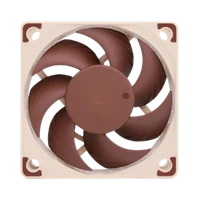
Making a Bitaxe quieter: fan control, Noctua fan and cooler upgrades
Why a Bitaxe suddenly runs its fan at 100 %, which settings in AxeOS and NerdOS calm the fan down, and what clock speed, placement, a Noctua NF-A4x20 5V PWM and bigger coolers achieve. With measurements instead of datasheet figures.

Bitaxe or Nerdaxe: differences, every model and which miner suits you
Same chips, different firmware, different display: Bitaxe and Nerdaxe compared head to head. Every model with the factory values from its firmware, AxeOS 2.15 against NerdOS 1.1, the chip generations from BM1366 to BM1373, noise, power supply, block odds and a recommendation for every use case.

Bitaxe firmware update: how to update AxeOS 2.15 safely, with flasher.bitaxe.de or in the dashboard
Since AxeOS 2.15 a Bitaxe needs a single file, the Nerd series still needs two. This guide shows which version is current, how the update works with flasher.bitaxe.de and in the dashboard, what is kept, how to switch back to the previous version with one click and what helps if the miner stops answering afterwards.

AxeOS explained: dashboard, settings and every reading on a Bitaxe
AxeOS 2.15 page by page: every dashboard card with normal values, all messages, the icons at the top right, Pool, Network, Settings, Swarm, Scoreboard and Update. Plus what helps when the dashboard does not load and how to use the API.

Bitaxe on Wi-Fi but not mining: fixing no shares and 0 hashrate
AxeOS loads, but the hashrate sits at 0 or no shares come in? The causes in order of how often they occur, with the exact messages from AxeOS 2.15.3 and NerdOS 1.1.0.1, the pause logic introduced in AxeOS 2.14 and the log lines that give the fault away.

Run your own Bitcoin node: hardware, cost and setup in 2026
What your own Bitcoin node gives you, which hardware is enough in 2026 (2 TB SSD, 8 to 16 GB RAM, about 10 W), how big the blockchain is, which node operating systems exist and how to go from a node to your own solo pool for your Bitaxe.

Choosing a Bitaxe mining pool: solo pools, fees and settings compared
Solo or shared pool, which fee and which server: here are all pools worth considering for a Bitaxe as of September 2026, what you actually get paid on each, and how to set up pool and fallback correctly in AxeOS 2.15.

Bitaxe hashrate error: what the value in AxeOS means and what helps
The error value in AxeOS comes straight from the chip: it counts faulty hashes. What is normal, how it differs from the gap to “Expected”, the four causes that push it up and what is going on at 0 GH/s.

Bitaxe power consumption: watts, kWh and electricity cost for every model
How much electricity does a Bitaxe really use? Here are watts, kWh and cost per day, month and year for every model in our shop, why AxeOS shows less than the wall meter, what overclocking costs and what the miner earns against its power bill.