


Open-source Bitcoin mining: what it is and why it matters
Open-source Bitcoin mining means: the schematic, board, bill of materials and firmware of your miner are public on GitHub. You can read what the device does, flash the firmware yourself, choose the pool freely and replace every component. This page explains what that means concretely, where the difference to closed miners lies, why it matters for Bitcoin – and what it is not.
Aktualisiert am 22. August 2026
skot/bitaxe repository, firmware ESP-Miner (the interface is called AxeOS), both on GitHub. Nerdaxe, NerdQaxe and NerdOctaxe are open developments on the same basis. Open does not mean more profitable – it means auditable, repairable and free of dependence on the manufacturer. What “open source” means concretely in mining
Three things are open, and all three have to be for the term to hold:
- The hardware. Schematic, board layout and bill of materials of the Bitaxe are in the skot/bitaxe repository. Anyone can rebuild the board, modify it or check that the delivered device matches the design. That is exactly how Nerdaxe, NerdQaxe and NerdOctaxe came about: their own boards based on the Bitaxe design, also published.
- The firmware. ESP-Miner runs on the miner’s ESP32-S3 and controls ASIC, fan, Wi-Fi and the stratum connection; the web interface on top is AxeOS. The source code is public, every release has a changelog, and you flash it yourself – with us in the browser via flasher.bitaxe.de, without a manufacturer tool.
- The protocol. The miner speaks Stratum V1 with any pool and any node of your own. There is no cloud account, no registration, no manufacturer server sitting between you and the Bitcoin network.
What is not open – on any miner in the world – is the ASIC itself: the BM1370 comes from Bitmain, its internals remain a trade secret. Open-source mining starts where you can take control: everything around the chip.
Open or closed – the difference day to day
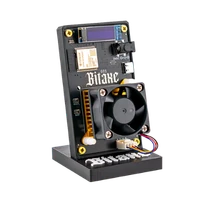
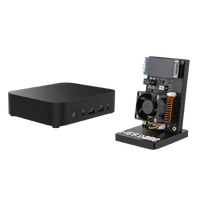
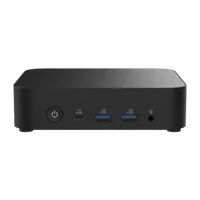
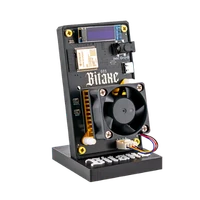
We sell both, so the difference can be shown with two devices from our own range. The Avalon Nano 3S from Canaan is a closed device: 6 TH/s at 140 W, runs reliably, has an Ethernet port – but firmware and board are not viewable, updates come only from the manufacturer, and if Canaan ends support the device stays where it is. The Bitaxe Gamma is the opposite: 1.3 TH/s at 15 W, open board, open firmware, fan, cooler and display replaceable, updates from the community.
| Open (Bitaxe, Nerdaxe, NerdQaxe) | Closed (Avalon Nano, industrial ASICs) | |
|---|---|---|
| Firmware | Source public, flashable yourself, forks possible (OSM-OS) | Binary from the manufacturer, only via their tool |
| Pool and node | Freely chosen, own node via Public Pool | Freely chosen, but no local node integration |
| Repair and modification | Cooler, fan, display, power supply replaceable to standard | Device as a whole, spare parts only via the manufacturer |
| Auditability | Anyone can read what the device sends to the network | Trust in the manufacturer |
| End of support | Community keeps maintaining (OSMU) | Device stays on its last state |
| Efficiency | BM1370: 14–16 J/TH; BM1373 (Gaia): ~10 J/TH | Nano 3S: ~23 J/TH |
Why this is more than principle is shown by a case from 2017: the firmware of the Antminer series contained a function (“Antbleed”) with which the manufacturer could have shut devices down remotely. With open firmware, something like that would have been noticed on the day of the commit. On the Bitaxe anyone who wants to reads what the device does – and the community does so with every release.
The family: Bitaxe, Nerdaxe, NerdQaxe, NerdOctaxe
The Bitaxe is the reference design of the community around bitaxe.org: a Bitmain ASIC on an open board, driven by an ESP32-S3. The NerdMiner team developed its own boards from it: the Nerdaxe Gamma with a 1.9-inch display, the Nerdaxe Gaia with the new BM1373, the NerdQaxe with four and the NerdOctaxe with eight chips. All run ESP-Miner/AxeOS (the Nerd devices on the NerdQaxe branch that supports the large display), all use the same pool fields, and all are updated through the same web flasher. The community behind it is Open Source Miners United (OSMU) – a Discord where developers, manufacturers and users maintain the same firmware.
What that means for you: one tutorial applies to all devices, a cooler upgrade fits Bitaxe and Nerdaxe alike, and if a board goes out of production the firmware keeps running anyway. Which device fits which setup is compared in Bitaxe or Nerdaxe.
 −37%
−37% Bitaxe Gamma | 1.3 TH/s
 Vorbestellung
 Nerdaxe Gaia | 2,6 TH/s
Why it matters for Bitcoin
Bitcoin is only as decentralised as its infrastructure. Hash rate concentrates in large farms, the hardware comes from two or three manufacturers, and the firmware of that hardware is closed. Open-source mining addresses all three points: it brings hash rate into living rooms instead of warehouses, it makes the devices reproducible, and it makes the software auditable. A single Bitaxe does not change the statistics – tens of thousands of Bitaxes, each with its own address and optionally its own node, are a different part of the network than a farm with the same hash rate.
Add the sovereignty of the individual: anyone who connects their miner to their own node (Public Pool on Umbrel) builds their own block template – no pool decides any more which transactions go into the block. That is technically possible with closed devices; with open ones it is a given.
What open source is not
Open does not mean more profitable. At 1,000 EH/s network hash rate a Bitaxe Gamma has about a 1 in 15,000 chance per year at the block, for around €37 of electricity; the expected value is below the power cost (the maths: Finding a block with a Bitaxe, your device: mining calculator). Open also does not mean more finished: the Bitaxe is an open board with a fan, not a case with one-button operation – in return it is set up in ten minutes and can be changed in every respect. If you want a device you plug in and never look at again, the Avalon Nano is right for you. If you want to know what your miner does, the Bitaxe.
How to get started
- Pick a device: Bitaxe Gamma for the quiet entry, Nerdaxe Gaia for the best efficiency, NerdQaxe++ for more chance – overview in Buy a Bitcoin miner.
- Set up: Wi-Fi, then the four pool values from the pool configurator in AxeOS – guide in the Bitaxe guide.
- Understand: AxeOS explained names the normal value for every readout.
- Go further: your own node with Umbrel, firmware forks via the web flasher, overclocking following the overclocking guide.