


Blog & guides
Guides, comparisons and background on Bitaxe, Nerdaxe, NerdQaxe, AxeOS, pools and solo mining – written from practice, with no promises of returns.

Who owns the Bitaxe?
A single reseller registered the names Bitaxe, Nerdaxe, NerdQaxe++ and Nerdminer as trademarks, two of them for devices it does not even sell. In April 2026 it used them to have 71 of our pages removed from Google. We show the register entries, the letter from their lawyers and the contradictions that come with them.
Read more →
Finding a block with a Bitaxe: what are the odds, really?
Every ten minutes the Bitcoin network raffles off 3.125 BTC – and your Bitaxe automatically plays along. Here is the honest math: the odds per block and per year for every device, the lottery comparison, and what exactly happens if you actually hit.
Read more →
Setting up the Bitaxe Gamma 601: a step-by-step guide to the first start
Setting up the Bitaxe Gamma 601: a precise step-by-step guide to Wi-Fi, AxeOS, pool settings, your Bitcoin address, monitoring, common mistakes and sensible next steps.
Read more →
Overclocking a Bitaxe: a safe guide to more hash rate
Concrete starting values instead of rules of thumb: 575 MHz at 1200 mV for the Gamma, 700 MHz for the NerdQaxe++, 25 MHz steps, 20 mV of follow-up – and the temperature limits where it really stops. Including the component that gives up before the ASIC does.
Read more →
Paying with Bitcoin at Bitaxe.de: how to get 5% off
Want to order your Bitaxe and see the option to pay with Bitcoin at checkout? Perfect – that is exactly what we introduced the Bitcoin discount for.
Read more →
Connecting a Bitaxe to your own Bitcoin node: setting up Public Pool on Umbrel
Your own node, your own stratum server, a found block paid straight to your address: how to set up Public Pool on Umbrel and connect your Bitaxe – with all AxeOS values, storage and sync figures and the six mistakes we see most in support.
Read more →
Which power supply for a Bitaxe? When the standard one is enough and when an upgrade pays off
Every miner from our shop ships with the matching power supply. Here are the values for every model, the connector, the one number in AxeOS that exposes a weak supply, and the maths for several miners on one unit.
Read more →
Making a Bitaxe quieter: cooling, airflow and worthwhile upgrades for home mining
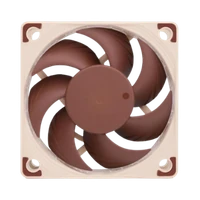
The quietest lever costs nothing: the fan curve and the clock in AxeOS. Then come placement, a Noctua fan and more cooling surface – here in the order in which they help, with the values that keep the miner healthy.
Read more →
Bitaxe or Nerdaxe: which open-source miner suits your setup better?
Same chip, same firmware, different device: Bitaxe and Nerdaxe compared head to head – hash rate, power draw, display, noise, power supply and price of every model in two tables, plus the recommendation for each use case.
Read more →
The AxeOS update on a Bitaxe: how to flash firmware safely and cleanly
Two routes, both in five minutes: via the web flasher over USB-C or directly in the AxeOS dashboard with www.bin and esp-miner.bin. Here is when an update is worth it, what is kept, which order matters and what to check if the miner stops answering afterwards.
Read more →
AxeOS explained: dashboard, settings and the readings that matter on a Bitaxe
Every tile in the AxeOS dashboard explained – hash rate, efficiency, shares, best difficulty, temperatures, voltages – with the values that are normal and the ones that mean you need to act. Plus every setting beginners need, and the ones to leave alone at first.
Read more →
The Bitaxe connects to Wi-Fi but does not mine: checking router and network faults systematically
Bitaxe online but no shares? This guide shows how to narrow down router, Wi-Fi, DNS and pool problems on a Bitaxe with AxeOS, step by step.
Read more →
Running a Bitcoin node: why your own node and your own hash rate belong together
What a Bitcoin node does, what it gives you day to day, which hardware it needs (2 TB, 16 GB, around 10 W) and how long the first sync takes – plus the reason node and Bitaxe together are more than the sum of their parts.
Read more →
Choosing a Bitaxe mining pool: which pool suits your setup
Solo or regular pool, which values go into AxeOS and why we recommend our own solo pool in Frankfurt for every Bitaxe – with a comparison table of the five pools that make sense for home miners.
Read more →
The Bitaxe hash rate error explained: what the error value in AxeOS really means
The hash rate error is the gap between the hash rate your Bitaxe delivers and the one it must deliver at its clock. Up to 5 % is statistics; persistently above 10 % has one of four causes – all four are here, in the order you check them.
Read more →
Calculating Bitaxe power consumption: what home mining really costs
How much electricity does a Bitaxe or NerdAxe really use? This guide shows how to work out consumption, running costs and efficiency in home mining realistically.
Read more →Looking for a place to start?
The guide hub walks you through the basics, the setup and the buying decision in the right order.